The Cake That Went Wrong

We finished our Christmas cake a few days ago and since we’re not doing a clean/dry/healthy January or whatever it is we’re supposed to do, I decided to bake a cake yesterday, the first baking I’ve done since before the festive season.  When I asked my youngest what he’d like, he didn’t hesitate: the ginger cake from the Nordic Bakery Cookbook, a gift to me from his big brother.  I’m half Norwegian, which makes the boys a quarter Norwegian, and we all love the recipes in this book.  Actually, our youngest has baked more from it than I have, and very successfully.

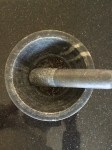
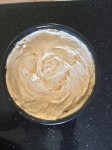
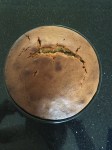
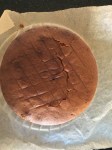
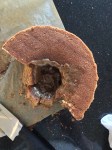
Since I last made the ginger cake (in an 8″ tin), I’ve bought the correct sized (7″) tin, which is the one I used yesterday.  I knew the cake would therefore be deeper and I’d need to make sure it was cooked in the middle.  At the end of the allotted time, the skewer came out clean, so I knew it was cooked through, but as you can see in the photos, I was WRONG.  As I turned it over the middle began to ooze out, creating, to much wailing by me, a massive sink hole.  How could this be?   One explanation is that I inserted the skewer at an angle and somehow missed the middle, but I don’t really believe this.  Nor do I think it has anything to do with the timing adjustments one has to make for Aga cooking because I’ve got used to that now and nothing like this has happened before.  Mind you, that’ll teach me to think smugly that I might write a blog in which I pass on cooking tips and recipes to fellow Aga owners.  Rest assured though, I will not rest until the mystery is solved and I WILL be having another go at this one.

Apart from the middle, which I scooped into the bin, the cake was absolutely fine, so when my son came home from school, I put the kettle on and we laughed at my mishap.   Oh, and ate some cake.


Desert Island Discs

Today’s podcast to accompany my dog walk was Desert Island Discs.  The castaway this week was Sir Anthony Seldon, the former Master of Wellington College and author of several political biographies.  While I was familiar with his career, and his views on education in particular, until today I did not know anything about his personal life.  He spoke movingly about his marriage, his children and his wife’s diagnosis with terminal cancer.

He said a couple of things which resonated with me which I quote here, but do listen to the whole podcast.

In answer to Kirsty’s question about whether independent schools should be abolished, he said: “If the quality of education was as good as it is at the best independent and the best state schools, then that might be the ideal, though I still think there’s a role for a different sector that challenges, which doesn’t have to be subject to the same governmental regimes as the rest.”

“It’s the raising of expectations which is at the heart of good education, good schooling, good universities…”

“When the children came into their mid to late teens and discovered their friends were a lot more exciting than their mum and dad…we did discover that by taking them off on short breaks of four or five days every year to somewhere sunny with a bit of culture, it was a way of keeping them together.”


IMG_2448

It was cold but a gorgeous day for walking the dog.


You will have noticed that this post has nothing to do with my Aga, but it is about what I’ve been listening to on Radio 4 which is the usual background noise in my kitchen, so I have no plans to rename my blog yet.


Supper à Deux: Darina Allen’s Penne with Tomatoes, Chorizo and Cream

Supper à Deux: Darina Allen’s Penne with Tomatoes, Chorizo and Cream

Last Saturday evening our youngest son was heading out to a party.  I like to think we’re old hands at matters teenage so we trod carefully and got away with asking a few questions, which elicited the following: it was local, so he could walk to it, and was being hosted by two of his school friends. We were also told he and others would be gathering at a friend’s house beforehand and walking to the party together.

We’ve been here before of course, my husband and I. The difference is that when our older boys went to parties, there was always at least one left behind who, depending on his age at the time, needed some sort of attention from us. Since our third son left home to seek his fortune (well, first to go to university and now London to try out various jobs) our life has been undergoing subtle change. We’re very gradually becoming accustomed to just the two of us sitting down to eat together, but it’s still quite a rare thing because my husband tends to be away two nights a week in London. And we won’t be proper emptynesters until we can go to sleep without listening out for the key in the door announcing that someone has arrived home safely.

So that he could dash off to meet his friends on Saturday without going hungry, the boy ate a large, late lunch. Once he’d gone, I set about preparing this pasta dish which I’d found on the BBC website. It was the first time I’d cooked anything by Darina Allen, but it was delicious and I’ll definitely make it again and seek out more of her recipes. I halved the quantities and, I confess, DID NOT peel the tomatoes, but I did deseed them. I hate fiddly cooking jobs. I’m probably rather a lazy cook. I also left the rosemary out. Get me.  Oh, and we didn’t have parmesan with it either.

Darina Allen’s Penne with Tomatoes, Chorizo and Cream

Ingredients

  • 450g penne pasta
  • 25g butter
  • 1 tsp finely chopped rosemary
  • 700g fresh ripe tomatoes, peeled, seeded and diced
  • salt and freshly ground pepper
  • sugar, pinch of
  • 175-225g chorizo
  • pinch chilli flakes
  • 125-175ml cream
  • 3 tbsp finely chopped flatleaf parsley
  • 4 tbsp freshly grated parmesan, to serve (optional)

Method

  • Melt the butter in a saucepan on the simmering plate, add the chopped rosemary and diced tomatoes
  • Season with salt, pepper and sugar
  • Cook in the simmering oven until the tomatoes have just begun to soften into a sauce
  • Chop the chorizo into small chunks, say 5x5mm, and add to the pan with the chilli flakes
  • Add the cream and two tablespoons of the parsley, and allow to bubble for 3-4 minutes on the simmering plate, stirring frequently until the cream has reduced by half.  Keep this warm in the simmering oven
  • Cook the pasta (on the boiling plate) until al dente, drain and stir into the sauce
  • Sprinkle with the remaining parsley

We also ate some of the Bordeaux Quay focaccia I’d bought at Whiteladies Road Market in the morning, which probably made the meal somewhat carb heavy but hey, it was Saturday night and we thought we’d live a little. We drank a glass or two of Rioja too!


Bread

Some of our favourite bread comes from Bordeaux Quay.  Luckily, if I don’t want to go all the way down to the harbour, I can buy it either at the butcher’s Ruby and White or at Whiteladies Road market which takes place every Saturday and is a few minutes’ walk from my house.

We were there yesterday morning, stocking up on sourdough, pain de campagne and granary bread, which I shall save for toasting.  As you can see, we should have gone a little earlier; the tables were becoming rather bare.


So much is written and said about food allergies these days and about wheat in particular.  Every other person one knows seems to have a wheat intolerance.  There is a case for eating good quality bread, instead of some of the factory-baked stuff and this article on sourdough bread which I read recently explains why.

Which brings me on to toast (sort of).  I wrote on my tumblr about my old-fashioned way of making toast on an Aga , and explained that naturally, the quality of the bread used to make the toast is a factor, but everything being equal, Aga toast is still the best.  Here are a couple of toasting tips for Aga owners who may not have tried doing it this way:

  • Put the Aga toaster on the hot plate for a few minutes first to let it get very hot.  This prevents the bread from sticking.
  • If some bread does stick, put the toaster back on the hotplate when you’ve finished.  This burns off any stuck bits.
  • Use the wire brush that came with your Aga to scrape away all the burnt crumbs from the hotplate.


Don’t even think about reverting to a “normal” toaster.  Why would you?  You get better toast this way and you are making the most of your Aga.  The same applies to kettles.  Once you have an Aga you don’t need an electric one.  Think how much work surface you gain by not having either a toaster or a kettle taking up space on it, and of course how much electricity you save.

Fishing

As I wrote in my tumblr my husband is a keen fly-fisherman.  He finds it very therapeutic; you have no choice but to switch off to everything else and concentrate.  During the season he fishes for trout and salmon and if we’re lucky brings fish home for me to cook and the family to eat.  It’s not always me who’s left to do the cooking though; he will often prepare a small trout for breakfast by zapping it in the microwave with a slice of lemon, some seasoning and a little butter.  This wouldn’t be my menu choice first thing in the morning but the male members of this household are happy to eat it.

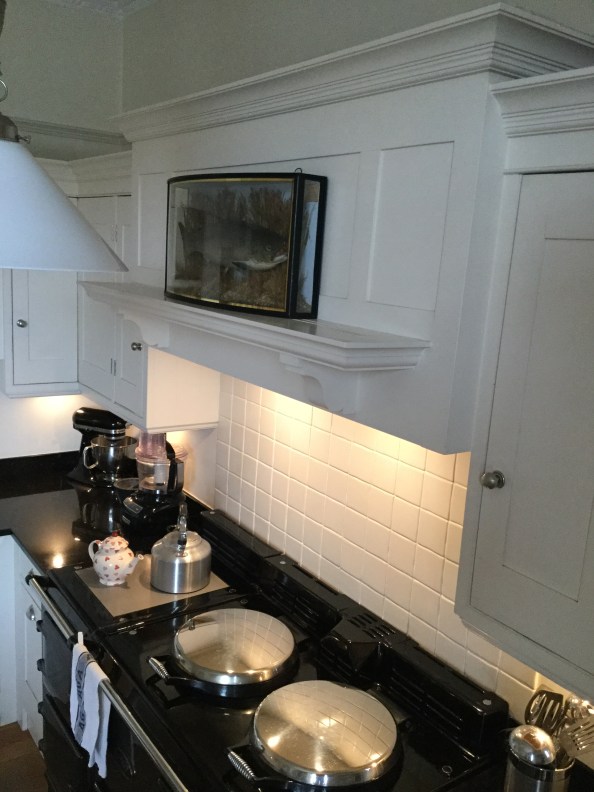
When we had our new kitchen installed in 2006 (not so new anymore then) and my brand new Aga was in place, our friend Drew, maker of beautiful kitchens and sometime fisherman himself, asked me how I was planning to adorn the shelf above the Aga.  Since I had as yet no plans for the shelf he took it upon himself to bring along an item from his shop: a trout in a glass case.  At first I said that no, absolutely not, I was not the sort of person who displayed dead animals in her kitchen, but he explained that this was not a real trout and, with my husband looking on in amusement, placed the case on the shelf.  I had to admit that it was rather fine but continued to maintain (especially now that I’d seen the price tag!) that I didn’t want it.

Fast forward a few days to a sunny spring evening by the River Usk.  My husband had spent a few hours making the most of the early evening rise and the boys and I joined him and others, including Drew and his family, for a barbecue.  The conversation turned to my kitchen, which was becoming quite well known now that Drew and I had been telling people about it and he’d put some photos of it on his website.  He told the assembled friends that the only thing missing in it was a large trout in a glass case.  By now we’d all had a few drinks and I saw an opportunity.  I handed the mellow Drew another beer while telling him he should give me the trout for free after all the publicity I’d given him for his kitchen business, and, would you believe, he agreed.

Anyone visiting who admires the trout above the Aga is told that it’s the result of one of my, not my husband’s, “fishing” trips.

IMG_0633


Aga Omelette

I’ve only just started this blog but I’m already finding it a welcome refuge from other areas of the Internet.  I mean, why would I want to debate on Twitter about the merits of the junior doctors’ contract when I can write about cooking an omelette and spend a few minutes deciding how to arrange my photos of same?  I don’t support the strike but it seems that explaining how hard doctors work, how much pressure they’re under and how much family life they miss out on just doesn’t wash with some people so today, omelettes it is.

Since my mother-in-law came to live with us when we moved to Bristol in 1997 it has become a tradition to have Sunday lunch together.  She has her own flat complete with kitchen and is independent but coming together for this meal punctuates the week very nicely and I’m sure has enhanced the relationship between grandmother and grandsons.  Depending on what everyone’s doing during the day, it sometimes has to be supper, but this joint meal is rarely abandoned, even now that there’s often only one grandson present.  Granny tends to make the pudding and do the vegetables (and insists on this despite being 90 and somewhat frail) while I do the meat (usually a roast but not always) and potatoes.  If we eat at lunchtime, we tend only to have something light in the evening and this often involves eggs.  Sometimes it will be a nursery tea of boiled egg and toast (soldiers when the boys were young).

This week we decided to have omelettes, upon which my husband, grabbing my iPad,  excitedly announced he’d take photographs so that I could blog about it.  I’ll be honest with you, I was sceptical; there’s little difference between making an omelette on an Aga and in a conventional oven and I did not think it would make for an interesting blog post, but he took the photos and was enthusiastic so how could I deny him?  The method I’ve found works best is to start it off on the simmering plate and then, having pulled in the edges a little after a few seconds’ cooking, to transfer it to the roasting oven for a minute until there’s no liquid left but it’s not, heaven forbid, overcooked.


Son4 made his with chopped red chilli and I made the husband’s, while he took pics, with fines herbes (parsley and chives in this case).  A little chilli oil was drizzled onto both.


Chicken Tagine


We’ve had a weekend guest. One of our oldest friends, who was at medical school with my husband, came down on Friday evening so that he could go walking in the Wiltshire countryside with my husband on Saturday. His wife couldn’t come this time because she’s a busy GP and was doing a Saturday surgery. While the men were out all day I had a lovely time pottering about in my kitchen. I didn’t spend the whole day indoors (morning: farmers’ market; afternoon: took Son3 to the station) but it was so dark and wet outside, I wouldn’t have complained if I had.

I’m a big fan of the series “How to make the perfect…” written by Felicity Cloake in the Guardian. She cooks popular dishes by well known cooks and chefs in an attempt to arrive at the “perfect” version. Her efforts are written up in detail and make excellent reading. I would urge you to check it out and I think most of the recipes are available via the Guardian website.

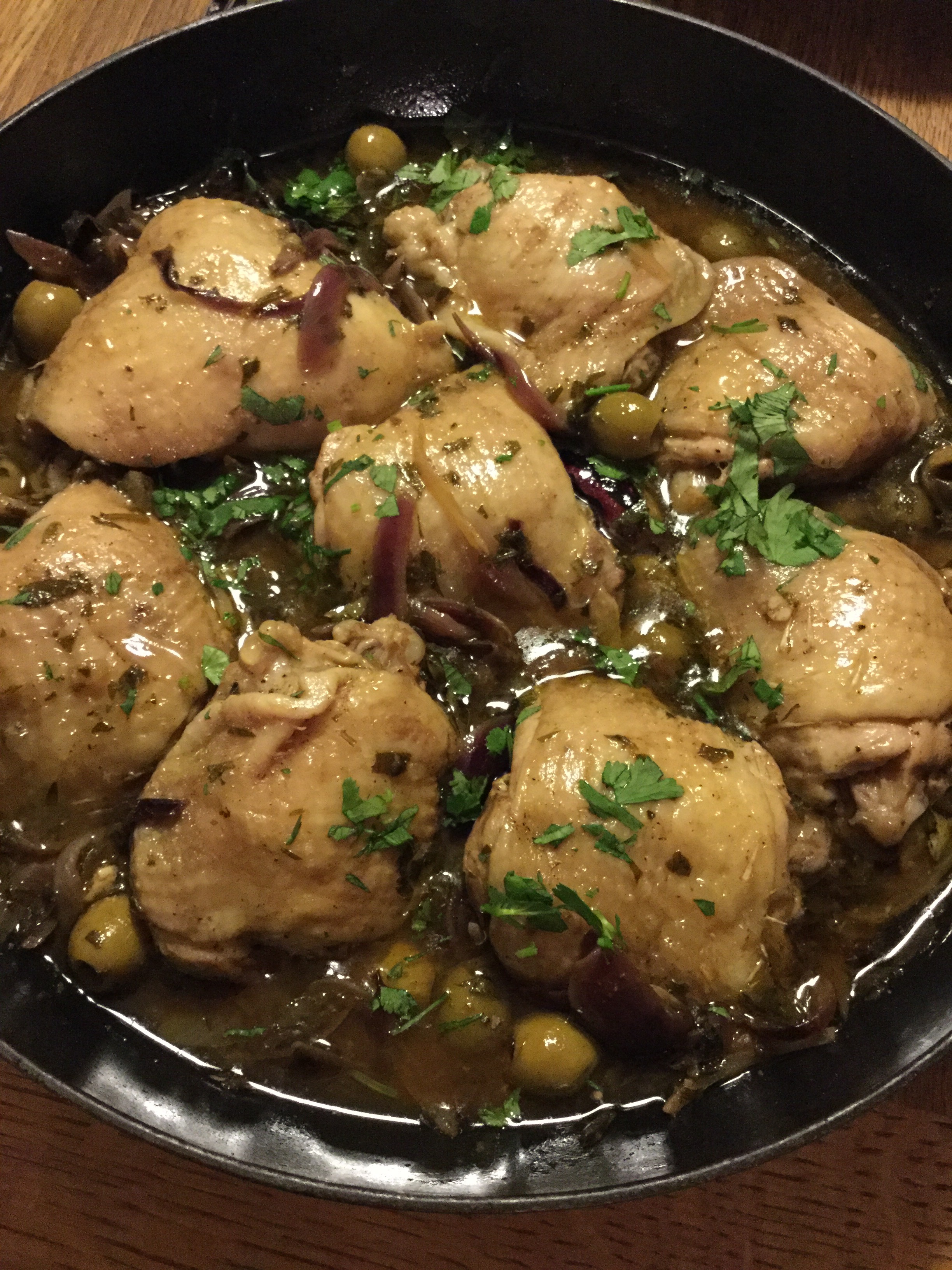
Last night I made her chicken tagine and we absolutely loved it. I made a couple of adjustments though. First, I could not find saffron anywhere in Bristol. Okay, admittedly I didn’t try every single shop but you know what I mean. Therefore I threw in a teaspoon of ras-el hanout instead. This is not an exact substitute, obviously, but seemed to me to be an authentic addition. Secondly, I used green olives instead of violet ones because I love green olives and felt they were just right in this dish.

Now, I’m sure you Aga cooks out there are dying to know how I cooked it. Well, I started the onions on the simmering plate and then transferred them to the simmering oven for a while to soften before adding the spices and remaining ingredients. Once I’d added the chicken thighs, olives and water I let it all come up to simmering point on the simmering plate, put a tight lid on and transferred it to the simmering oven. I reckon it could have stayed there for two or three hours but was cooked after one. As you know, little harm comes to anything left indefinitely in the slow oven of an Aga.

A couple of things. I used less water than the recipe prescribed, perhaps just 100ml. I was taught at an Aga demonstration I attended when mine was first installed that you always need less liquid than the recipe demands because it simply doesn’t evaporate in an Aga to the same extent as in a conventional oven. And finally, I want to mention how much I love that in this recipe you don’t have to brown the chicken pieces in advance. In fact, browning meat might be my most hated cooking-related activity, because it always makes a mess with fat splashing everywhere, including in my hair.

Anyway, I will definitely be using this recipe again, and, I hope, with saffron in it, unless there’s some sort of worldwide shortage I haven’t heard about.


Christmas Day Gravy

Isn’t it typical that something that hardly ever happens occurs on Christmas Day at a moment of high stress when you’re doing all those last minute turkey-related things. And I can’t pretend that the last hour or so before a roast dinner is served isn’t especially tricky with an Aga.

On Christmas Day a few weeks ago, when my turkey was ready and resting, the table was laid and the potatoes were roasting, I set about making the gravy. I poured all those delicious juices and bits from the roasting tin into a saucepan, added wine and giblet stock and waited for it to start simmering. And this is where I went wrong: having moved the pan to the boiling plate because it simply wasn’t coming to the boil quickly enough for my liking, I allowed myself to be distracted by some other task like finding a suitable bowl for the cranberry relish. The next thing I knew, the gravy was boiling over and covering the boiling plate and beyond. The kitchen filled with with smoke and a pungent smell of burning gravy. By this time I’d moved the pan to the simmering plate and it settled down quickly to a gentle simmer, but there was a lot of mopping up to do and the smell lingered well into Boxing Day. Lest I hadn’t noticed this, my husband, who has a very strong sense of smell, kept reminding me of it!

So let that be a lesson to you. That boiling plate is hotter than you think, even on Christmas Day when the Aga has lost heat after roasting a huge turkey and mountains of potatoes.