

Hello, it’s been a while. Rest assured I’ve been cooking and have plenty to share with you, but somehow I have not got around to doing it yet.  My youngest son has got me into sourdough baking, which I am enjoying far more than I ever expected. It’s challenging though and while my loaves are improving, I’m not ready to write about it yet.
Today I want to tell you about ragù: I’ve been experimenting a little with it lately. Ragù simply means meat sauce and I suspect in Italy it’s one of those dishes for which there are as many recipes as there are cooks. Here we tend to call it “bolognese sauce”, “spaghetti bolognese” being one of this country’s most popular dishes, despite the fact that in Bologna they always serve their ragù with tagliatelle and never spaghetti.
I’m sure you all have your favourite ragù/bolognese recipe. I wrote about mine here, as it’s used to make Tamasin Day-Lewis’s lasagne, but recently I’ve made some adjustments to it to make it work better in the Aga. I felt the finished sauce contained a little too much liquid; one of the best Aga tips I’ve been given is to use less liquid than a recipe prescribes because in an Aga there’s no evaporation. It’s why Aga dishes are always so deliciously succulent and moist. The result of my tweaks is a thicker sauce and I’m very pleased with it. I’ve also been making another ragù recipe which my eldest son recommended to me; it’s incredibly simple and delicious and comes from The Silver Spoon, the English edition of the bestselling Italian cookbook, Il Cucchiaio D’Argento. I own the Italian version, a Christmas present from my sons, but for some reason it doesn’t contain this specific recipe. You will see that the addition of garlic to this recipe is optional. I used to think garlic was essential to ragù but it turns out Italians often don’t add it. I urge you to try this recipe without; I was surprised at how flavourful it was. The wine is also optional but I confess I have only ever made this version with wine.
I have only used minced beef in these two recipes but you can use half beef/half pork or veal. Ragù is also delicious with the addition of a little crumbled up Italian sausage. It must be a proper Italian one though, for reasons of both flavour and texture.
Anyway, here are the two ragù recipes for you, with quantities adjusted to make them work well in the Aga.
Mum’s Ragù
(Sorry, not sure how many people this large quantity will serve, but I’d say at least 10)
Ingredients
- 1 kg minced beef (not extra lean: you need the fat for flavour)
- 2 onions, chopped
- 3 carrots, diced
- 2 sticks celery, chopped
- 3-4 cloves garlic, crushed
- 3 tbs olive oil
- 25g butter
- 2 bay leaves
- 1 tbsp tomato purée
- 100ml milk
- 100ml white wine
- 200ml passata
- Seasoning
Method
- Take a large casserole or saucepan and heat the oil and butter in it on the simmering plate
- Add the onions and stir until coated in the oil and butter
- Cover and place in the simmering oven for 10 minutes or so before stirring in the carrots and celery and returning to the simmering oven until all the vegetables (the soffritto) are soft
- Place the pan on the boiling plate, stir in the crushed garlic and add the mince and some salt and pepper
- Stir it in while breaking it up with your wooden spoon. You could also use a fork
- Once the meat is brown all over move the pan to the simmering plate
- Add the tomato purée, bay leaves and milk and simmer for about 5 minutes before adding the wine
- After another 5 minutes of simmering, stir in the passata, cover and place in the simmering oven and cook for a minimum of 3 hours. You can always add a little water if it looks dry but it probably won’t. I sometimes uncover it for an hour or so towards the end
- Serve with tagliatelle (or spaghetti as in my photo above), which has been tossed with the ragù in the pan, and lots of grated parmesan
Son’s Ragù
(serves 4)
Ingredients
- 2 tbsps olive oil
- 40g butter
- 1 onion, finely chopped
- 1 celery stick, diced
- 1 carrot, diced
- 1 clove garlic, crushed (optional)
- 250g minced beef
- 1 tbsp concentrated tomato purée
- 120ml dry white wine (optional)
Method
- Gently heat the butter and olive oil in a heavy based saucepan on the simmering plate and add the onion. Cover and cook in the simmering oven for 10-15 minutes until translucent
- Add the carrot and celery and cover and cook for a further 20 minutes or until all the vegetables are soft
- Stir in the crushed garlic, if using, and then add the steak, with your pan on the boiling plate, breaking it up with a wooden spoon and perhaps a fork too
- Cook for a few minutes until all the pinkness of the meat has gone
- Remove to the simmering plate and stir in the tomato purée
- Stir in the wine, if using. If not, stir in the equivalent quantity (120ml) of water
- Season with salt and pepper and bring it up to the boil and if it’s looking dry add some more water: perhaps another 100ml
- Cover and transfer to the simmering oven and cook for a minimum of three hours, adding more water if you think it needs it. This also applies if you added wine initially
- Serve as above

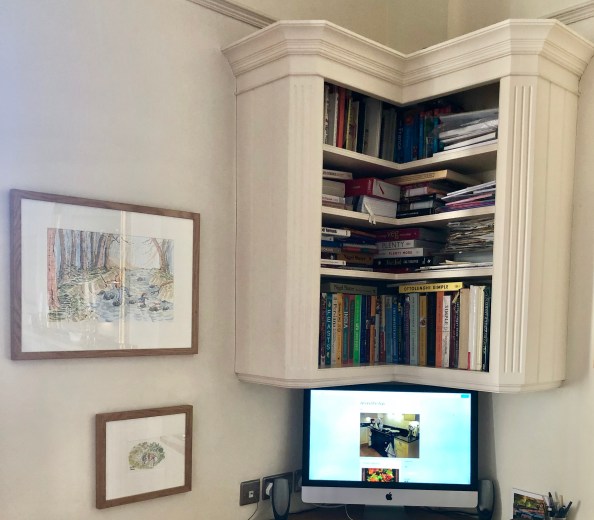 I love returning to old favourites and it only takes a newspaper food column or blog post to jog my memory and renew my fondness for a book or recipe.






 collection of menus rather than recipes; it’s also a sort of memoir, an account of the places she’s travelled to since she was a teenager, and where she discovered all the dishes she loves to cook and eat. I have already cooked a few of the recipes from the book, although I haven’t yet put together a whole menu. The first thing I made was this braised pork, which I pounced on because I knew it would be perfect for the


 Meanwhile the Sunday roast continues to happen in our house and last Sunday it was gigot boulangère. If ever there was a dish that lends itself perfectly to Aga cooking, this is the one. If you love lamb and love boulangère potatoes, then this is one for you. On Sunday morning, after a cup of tea in bed with the papers on my iPad, I got up at 8 to prepare this dish. My neighbours may have caught a glimpse of me fetching some rosemary and nearly catching my death in my garden in my dressing gown. In less than an hour though lunch was in the oven, to be more or less ignored until we were ready to eat it at 2pm.




 Around the Aga