Aga Christmas Cake

Aga Christmas Cake


It’s that time of year again. I always resist the commercial pressure to start Christmas shopping in September. It infuriates me that Christmas cards and decorations start appearing in the shops in August, throwing everyone into panic, and the more I’m urged to prepare, the less inclined I am to do so. Oh, and no mince pies are allowed in my house until December. But there are some things which it has always been necessary to do a few weeks or months ahead of the event and one of those is baking the Christmas cake. The same goes for the pudding but I must be honest and say I do not always make my own pudding. I’ve found there are excellent ones you can buy. For the last two years I’ve bought a pudding from Bertinet’s in Bath and they’ve gone down well with my family. I haven’t yet decided what I’m going to do about pudding this year; I might try Richard Bertinet’s recipe which is to be found online here. But the Christmas cake has to be homemade and I am always happy to set aside the time to make it.

Since owning my Aga I’ve used the Mary Berry Christmas cake recipe in The Aga Book. It’s delicious and I see no reason to change. She gives quantities for many different cake sizes, square and round. My usual size is the 10″/25cm round cake and that is what I have made this year. As with all fruit cakes, it is best when baked slowly in the simmering oven. I made mine in the afternoon and it was happy to wait in the tin and be placed in the oven at bedtime. This year it took nine hours and last year ten. Am not sure why the timings were different but it’s nothing to worry about.

Here’s the recipe for those of you who haven’t got The Aga Book.

Mary Berry’s Aga Christmas Cake (with a few modifications by me)

You will need a 10″/25cm loose bottomed or springform sturdy cake tin, greased and the base and sides lined (I used bake-o-glide)

Ingredients

  • 675g currants
  • 450g sultanas
  • 225g raisins
  • 450g glacĂ© cherries
  • Grated zest of 2 oranges
  • 300ml sherry (I used Harvey’s Bristol Cream)
  • 350g butter, softened
  • 350g dark brown sugar
  • 6 eggs
  • 100g self-raising flour
  • 225 plain flour
  • 100g blanched, chopped almonds
  • 2 tbsp black treacle
  • 2 tsp ground mixed spice

Method

  • Rinse, dry and quarter the cherries
  • Put all the fruit and orange zest in a container, pour over the sherry and give it a stir
  • Cover with a lid or a couple of layers of tightly sealed clingfilm and leave to soak for 3 days, stirring daily
  • Measure the butter, sugar, eggs, treacle and chopped almonds into a mixing bowl (I used my KitchenAid) and beat well
  • Add the flours and spice and mix thoroughly until blended
  • Stir in the soaked fruit and sherry
  • Spoon the mixture into the prepared tin and level out evenly
  • Bake in the simmering oven for about 9 hours, but keep an eye on it at the 8 hour point. It is done when a warm skewer comes out clean
  • Leave to cool in the tin then turn it out, feed it (see below) and wrap it. I like using parchment lined foil for this (from Lakeland)

Feeding

On a weekly basis from now on you are going to need to feed your cake: take a darning needle and pierce the cake all over, top and bottom; drizzle over a couple of teaspoons of sherry, let it sink in and then turn the cake over and do the same on the other side. Then wrap the cake and place it inside a (large!) airtight container.

Icing

About a week before Christmas I ice my cake with marzipan. I usually buy it but have been known to make my own; homemade is definitely better but sometimes I go for the quicker option. Once the almond icing has dried out, after a few days, I place the final layer of icing on my cake; invariably on Christmas Eve. For this I use ready-to-roll fondant icing. I do not make my own.

My husband took photos and I added captions to some to indicate the different stages.

And finally the finished cake, which we first sliced into on 28 December:


Spinach Soup

img_3971

Just a quick post today to tell you about my scrumptious spinach soup.  I have an autumnal cold and while I’m not feeling particularly unwell, it is nevertheless uncomfortable and annoying.  At 1 o’clock yesterday afternoon I realised I was hungry but had not planned anything for lunch.  Some hot, soothing soup was all I could think about but did not have any in the house.  Anyway, I really don’t like shop-bought soups: I find they’re over-flavoured, mainly of onion, and that this flavour lingers at the back of the mouth for hours afterwards.

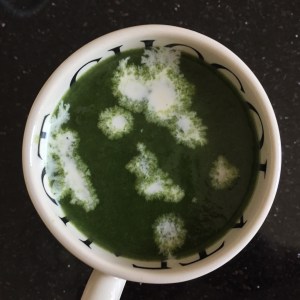
So I made spinach soup.  First, I took a medium-sized potato, peeled and diced it and sweated it in butter for about 15 minutes (simmering oven).  Then I added 450g frozen spinach (I didn’t happen to have any fresh spinach in the house; this soup was not planned) and lots of salt and pepper and let this cook for another 10 minutes or so before adding 500ml of chicken stock.  It was fortuitous that I’d made lots of stock the previous day, but I expect a stock cube or some Marigold Swiss vegetable bouillon powder would have done the job too.  I grated in some nutmeg, brought it all to simmering point and let it cook (in the simmering oven) for another 15 minutes.  I took it out and let it cool for a few minutes before blending it in the pan using my handheld blender.  I then checked the seasoning and temperature and ladled some into a mug, drizzled on a little cream and voilĂ .

One of the reasons I haven’t blogged much lately is that I’m unhappy with the photos I’ve taken of what I’ve cooked.  I read so many beautiful blogs and food websites that I’m sometimes embarrassed to include my pathetic iPhone camera efforts.  Since I’m not particularly interested in photography (unless someone else is taking the photos), I might just have to overcome the shame and carry on regardless.

My next post will probably be about Christmas cake.  Too early, you might say, but you’d be wrong.

Norwegian Apple Cake

Norwegian Apple Cake


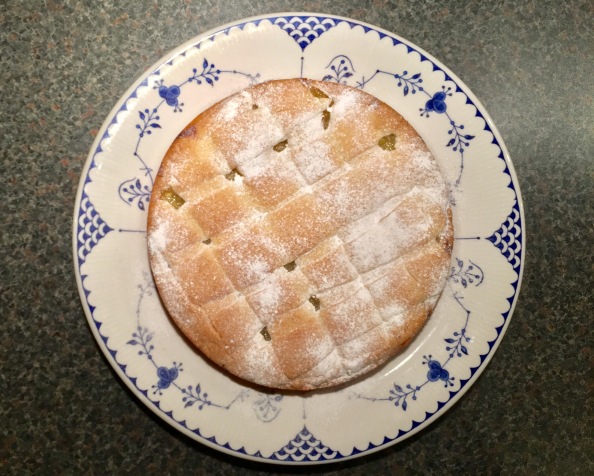
In this post a year ago I mentioned my Norwegian grandmother’s apple cake. It has become a Hardy family tradition to have it on Christmas Eve, but that doesn’t stop us having it at other times of the year. I have vivid memories of evening coffee time at my grandparents’ house in Oslo when cake would often be served.

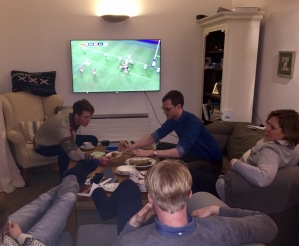
I made the Norwegian apple cake this weekend for second son’s birthday. It’s not a typical birthday cake but I don’t think that matters. We managed to get his brothers to come along and gathered in London for tea and cake which we consumed while watching the England v Wales Six Nations rugby match. img_6492

I don’t think my grandmother, who is no longer with us, would mind if I gave you the recipe.  It’s extremely easy to make. You can keep it just as it is, or add cinnamon to the apples or sprinkle some flaked almonds over it, or both.

Norwegian Apple Cake

You will need a 20cm/8″ springform cake tin, greased and base-lined with greaseproof paper or bake-o-glide.

Conventional oven: pre-heat to 160Âş-170ÂşC

Ingredients

  • 4 Bramley apples
  • 125g plus 1 tbsp caster sugar
  • 125g butter, softened
  • 240g self-raising flour
  • 1 large egg

Method

  • Peel, core and slice the apples and place the slices in a bowl with the juice of a lemon to stop them going brown. Add the tablespoon of sugar
  • Place the apples in a saucepan with a little water, let’s say 3mm deep. Cook them for a minutes on the Aga simmering plate or your hob, giving them the occasional stir with a wooden spoon. When they’re all soft, remove from the heat and leave to cool
  • Make your cake batter by placing the sugar, butter, flour and egg in a bowl and beating the mixture. I use my electric mixer
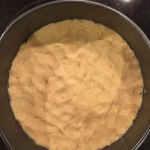
  • Press two thirds of this mixture into the base of your prepared tinimg_4305
  • Then spoon the stewed apples over this but not right up to the edge. If you feel you have too much apple mixture (after all, Bramleys vary in size) save some (freeze it if necessary) to have with roast pork at a later date
  • On a floured surface very gently roll out the remaining third of the batter and then cut it into strips about 1.5cms wide
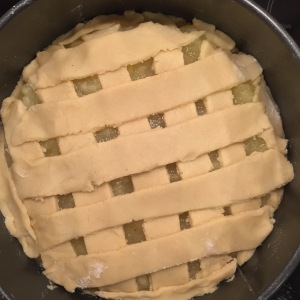
  • Arrange these strips in a lattice pattern over your cake. You don’t have to make a complicated over and under pattern. The dough is very soft and the strips might break as you pick them up. img_4306Don’t worry: you can just patch them together as you place them. As you can see from the photos, mine does not look remotely professional
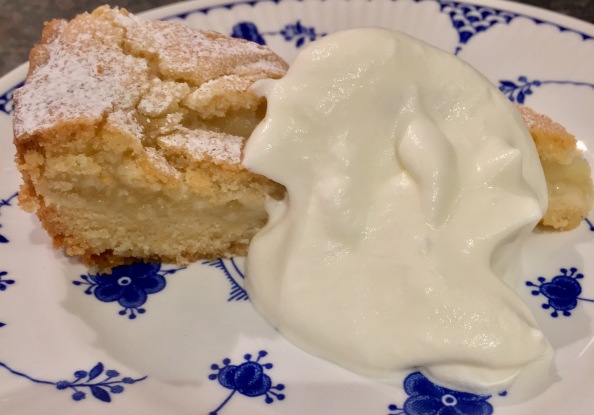
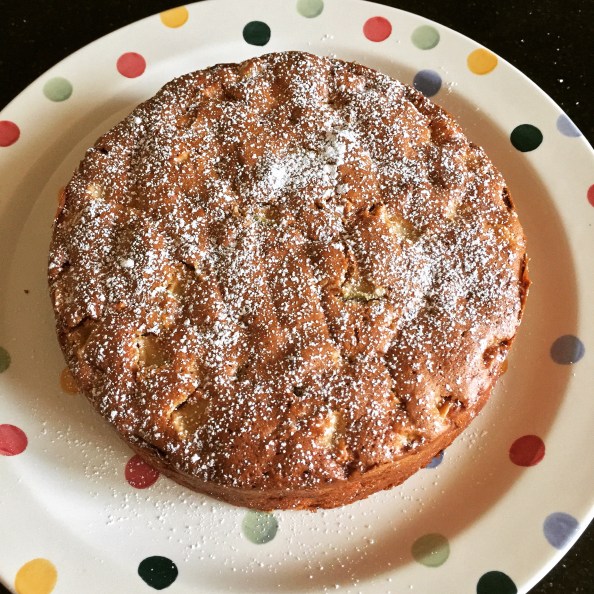
  • Bake your cake until golden brown. You can’t test it because of the apples.  I find it usually takes between 35 and 45 minutes.  I start checking it at about 25.
  • You can serve it warm (but not piping hot) or at room temperature, dusted with icing sugar and cinnamon. I’m not a cream person but this cake really is best served with a dollop of lightly whipped cream.img_4319

Another Day, Another Apple Cake


img_3827


I hope it’s still correct to say apples are in season, because it’s already a couple of weeks since I made this apple cake with autumn in mind and only now am I getting round to writing about it.  On the other hand, it’s not exactly a seasonal cake because we all cook with apples throughout the year and to make this cake I bought Bramley apples from the supermarket.

Regular readers will remember that I like making apple cakes and prefer them to pies and crumbles, partly because they work both as puddings (with whipped cream, say) and as teatime cakes.

You can’t have two many apple cake recipes in your repertoire, in my view, and I’m happy to add this Delia recipe to mine.  The lazy baker in me particularly appreciated the fact that peeling the Bramleys is optional.  That was a no brainer: I didn’t peel them.

To make the job even simpler I used the all-in-one method to mix all the ingredients together before folding in the apples and orange zest.

Ingredients

  • 225g self-raising flour
  • 1 rounded teaspoon baking powder
  • 1 tsp mixed spice
  • 1/2 tsp cinnamon
  • 3 Bramley apples
  • 175g soft light brown sugar
  • 2 large eggs
  • 75g butter, softened
  • Grated zest of an orange
  • 1 tbsp milk (if needed)
  • A little icing sugar

Method

  • Conventional oven: pre-heat to 180ÂşC
  • Grease and base-line a 20cm loose bottomed cake tin
  • Sift the flour, baking powder and spices into your mixing bowl and add the butter, sugar and eggs
  • Beat until thoroughly blended.  I used my KitchenAid.  You could use an electric hand whisk
  • Chop the apples into small dice (with or without peel, remember) and fold into the mixture with the orange zest.  Add a little milk if the mixture seems dry
  • Spoon the mixture into your prepared tin
  • Bake in the baking oven of your Aga (or in the centre of a conventional oven at 180ÂşC) for about 1 hour, but do check on it every 10 minutes or so after the first half hour.  I put a piece of greaseproof paper loosely on top at this point because my cake was looking a little dark
  • The cake is done when it feels springy to touch and is starting to shrink away from the sides of the tin
  • Cool in the tin for 10 minutes or so before turning out onto a rack
  • Sprinkle with icing sugar to serve


SIMPLE


simple-jacket

Simple is the name of Diana Henry’s latest cookery book which was published this week.  If you read my blog regularly you will know I am a massive fan of her recipes.  I bought a copy as a birthday present for my future daughter-in-law; she and my son are keen cooks and, like me, love her way of cooking.  But I was going to resist buying a copy for myself and be patient and wait for someone to maybe give me one for Christmas.  Then my friend Caroline, another fan and a temptress, told me she’d already received hers and how brilliant it is.  You can guess the rest.  By the wonders of Amazon Prime membership my copy will be with me this evening.

Green Beans And Vinaigrette


Look away now if you don’t approve of buying those packs of fine green beans imported from Kenya and Zambia because of the air miles involved in getting them here.  We like them in this house so I do buy them.  In the last few weeks Waitrose has been stocking homegrown ones which seem a little fatter but are full of flavour.

One of my favourite ways of serving them in the summer is as a salad in a classic vinaigrette.  I cook the beans, drain them, plunge them in cold water so they retain their colour and drain them again.  And then I toss them in the vinaigrette which I make as follows:

  • Put a teaspoon of Dijon mustard in your salad bowl
  • Add a little salt, freshly ground black pepper and 1/2 tsp of sugar
  • Add 1 tbsp of white wine vinegar
  • Using a small whisk mix this a little and then slowly pour on extra virgin olive oil, continuing to whisk all the time.  I cannot tell you how much oil I use.  It emulsifies gradually and somehow I just know when it’s enough.  I taste it too of course: if it’s still very tart I might add a little more oil

You may prefer to make your dressing in a jug or small bowl, or in a jam jar by placing all the ingredients in it, putting on the lid and giving it a shake.  I find it easier to make it in the salad bowl and have got used to knowing how much dressing I need for the amount of salad I’m making.  Sometimes I vary it; for example, I might omit the mustard and add red wine vinegar instead of white, a little crushed garlic and some chopped flat leaf parsley; or, to avoid a too strong taste of raw garlic, I’ll peel and flatten a clove slightly and leave this in the dressing but remove it when it’s time to serve the salad.  This provides a mere hint of garlic flavour.

Making the dressing in the salad bowl takes me back to one of my first stays in France as a teenager.  I was 15 and went to stay with the family of Sophie, whom we had hosted the previous year.  Sophie lived in the heart of Burgundy country in a stunningly beautiful house which seemed to me like half a chateau.  She must have found our house in England very small.  It was a very hot summer and all meals were taken outside with rarely fewer than about ten people at each sitting.  Sophie’s father ran his own business and always came home for lunch, sometimes bringing a couple of colleagues with him.  We girls occasionally helped their maid, Lily, in the kitchen and that is where I learnt to make vinaigrette.  Another memory is Sophie’s father taking his lunchtime red wine (Burgundy, obviously) with ice cubes.  My father was astonished when I told him this.  I returned from that holiday with much improved French, new friends and feeling very worldly wise.

Plum Torte


When I posted a photo of this to Instagram yesterday I called it plum cake but it’s officially a torte and with just the two eggs, it is definitely a little less cake-y than most cakes.

Anyway, I recommend the recipe to you.  I bought a whole load of Victoria plums on Friday with the vague intention of doing a seasonal weekend bake but with no specific recipe in mind.  I couldn’t find the Diana Henry recipe I thought I had in one of her books so I Googled “Diana Henry plum cake” and this was the result.  The observant among you will notice it uses purple plums, but I saw no reason to let that put me off and brazenly set to work with my pinkish yellow Victoria ones.

I do hope it’s fine to post the recipe here.

Ingredients

  • 125g plain flour
  • 1tsp baking powder
  • pinch of salt
  • 115g butter, softened
  • 200g soft light brown sugar
  • 2 large eggs
  • 1 tsp vanilla extract
  • about 9 plums, halved and stoned
  • 1 tbsp granulated sugar
  • 2 tsp lemon juice

Method

(Preheat conventional oven to 180ÂşC)

You will need a 23cm springform tin.  Not sure why but Henry says ungreased.  I obeyed and it came out fine.

Don’t forget the sugar and lemon juice topping; I haven’t tried it without but have a feeling it makes all the difference, to both taste and texture.

  • Henry doesn’t, but I used the all-in-one method and placed all the ingredients except for the plums, granulated sugar and lemon juice in the bowl of my KitchenAid and mixed at high speed for about 2 minutes until thoroughly blended.
  • Spoon the mixture into your tin and place the plums, skin-side up, on top.
  • Sprinkle the granulated sugar and lemon juice over the cake and bake (in the Aga baking oven).  Takes about 45 minutes, in a conventional oven or the Aga.
  • The cake is done when it starts to come away from the sides of the tin and a skewer inserted into the middle comes out clean.
  • Leave it to cool for 20 minutes on a rack and then release from the tin.  Be careful: it’s quite fragile and the plums have probably sunk to the bottom but this doesn’t matter at all.
  • We ate it at room temperature but it would have been just as delicious slightly warm.


Horseradish Sauce

For the first time in years I am alone on a Sunday.  Well, not completely alone since my mother-in-law is here, in her flat on the bottom floor of our house.  She’s worried that I’ve stayed behind because of her but while it’s true that she’s frail and we don’t like to leave her on her own, that’s not the case.  It was my choice and I’m enjoying the chance to catch my breath; I’ve never minded my own company.  My husband is on his annual Scottish fishing trip and youngest son’s in Cornwall with his brother and fiancĂ©e, staying with her family, and I’m just happy if everyone’s doing what they want to do.   I’ve mentioned before that we usually have Sunday lunch or supper with Granny, but she and I agreed there didn’t seem much point in doing a roast today.  I’m finding it quite liberating to be able to eat what and when I like.

So, although I’m not roasting anything myself today, I thought I’d tell you about this delicious homemade horseradish sauce I made last Sunday when there were six of us round the table for roast beef.  The same friends who gave us their homegrown courgettes had given us a piece of horseradish from their garden.  I’d never used it before and was delighted with this creamy, fresh-tasting sauce.

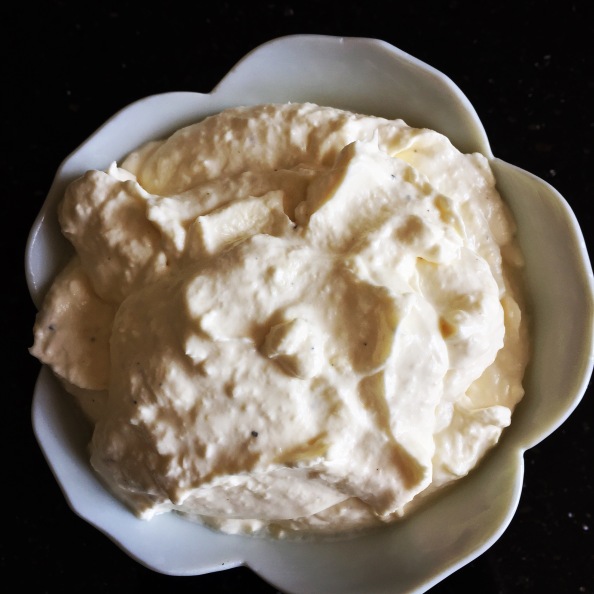
All you do is grate about 15g (more if you like extra heat) of horseradish and soak it in two tablespoons of hot water; drain, then mix it with one tablespoon of white wine vinegar, a pinch of mustard powder, salt and pepper and 150ml of lightly whipped double cream.

IMG_3654

Summer “Cooking”

Maybe I’m just making excuses to be lazy but the summer weather means I haven’t felt much like baking or cooking recently.  It hasn’t even been consistently hot and sunny but here in Bristol, even on the wet, grey days, it’s been muggy: not the sort of weather conducive to standing next to a hot oven for a few hours.

The solution is either to get your husband to barbecue or to prepare salads and light dishes requiring minimal cooking time.  I have managed to achieve both of these and thought I’d share with you some of the recipes we’ve enjoyed.

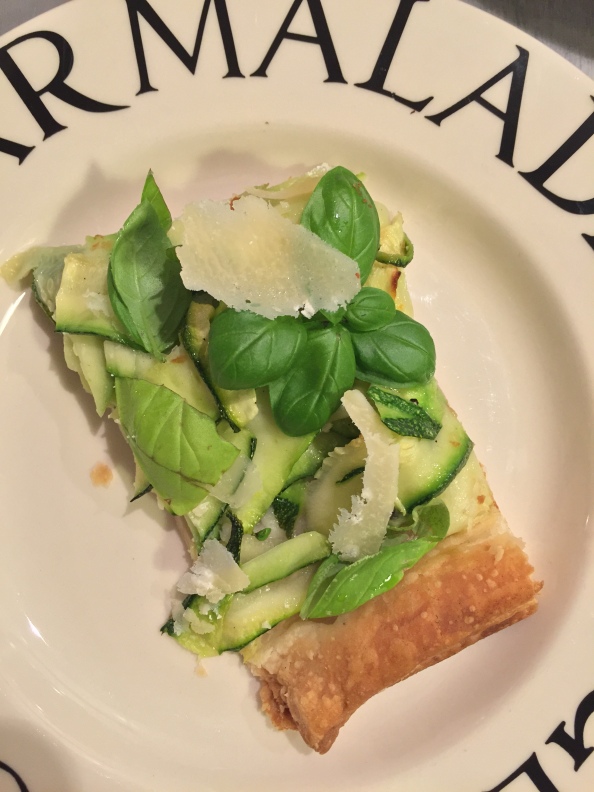
First up, this courgette tart, which was an excellent way of using up some superb homegrown courgettes a friend had given us.  The recipe is by Rose Prince and appeared in the Saturday Telegraph magazine a couple of weeks ago.  You will see that she recommends making your own rough puff pastry but I went for second best and used shop bought pure butter puff pastry.  I was not that successful at getting my courgettes to form “ribbons” but it didn’t matter that much.

IMG_3628

Next, burgers.  This was a very last minute supper.  It was a lovely warm evening and so we shelved our original supper plans and youngest son popped to Waitrose to buy some ground beef (not too lean) and burger buns.  All I do to make burgers is add ground black pepper and an egg, mix well and shape.  I don’t add onion or salt or garlic.  This way you can really taste the beef and get additional flavours from the sauces and other toppings you serve alongside (eg gherkins, ketchup, bbq sauce, mustard, cheese, lettuce, sliced tomatoes).  Sometimes we sandwich our burgers in ciabatta but, to be honest, the regular burger buns with sesame seeds work perfectly.  On this occasion, in addition to the toppings listed above, I found some red Romano peppers in the fridge which I halved, deseeded, drizzled with olive oil and sprinkled with salt for my husband to grill on the barbecue.  J invited his friend round to join us and by the time we were ready to eat it was nearly dark so we lit some candles and tucked in.  Impromptu evenings like this are very often the most enjoyable.

Once again, my latest favourite cookbook, Honey and Co., came up trumps when I wanted a simple fish recipe the other Friday.  The recipe in the book used sea bream but I could only get sea bass fillets; I doubt there’s much difference.  I just roasted the fish fillets (one each) in the Aga roasting oven for 8-9 minutes with a little olive oil and seasoning and squirted on some lemon juice at the end.  The salad ingredients are as follows (for 4 people):

  • 4 small Lebanese cucumbers or 1 long one
  • 250g red grapes
  • 4 sprigs fresh mint, leaves picked and chopped
  • 1 small bunch dill, fronds picked and chopped
  • Juice of half a lemon
  • 1 tsp salt
  • Ground black pepper
  • 3 tbsp extra virgin olive oil
  • 200g pain yoghurt (I used Greek style)

Peel the cucumber to create a zebra-striped effect, slice in half lengthways and use a teaspoon to scoop out the seeds.  Chop into crescents and place in a large bowl.  Wash and halve the grapes and add with the chopped herbs.  Season with the lemon juice, salt, pepper and olive oil and mix well.  Spread two tablespoons of yoghurt on each plate and pile some salad on top, ready for the fish when it’s cooked.  Et voilĂ .

Salade Niçoise

Salade Niçoise is one of my favourite summer salads.  On summer holidays in France I would always order it.  But what is it exactly?

Last weekend I decided to make it when my son W and his fiancĂ©e were home, but realised I’d never used a recipe and always just made it up as I went along.  Browsing some of my cookery books, magazine cuttings and Google, I realised that there were many different versions of this salad.  I consulted Twitter too: there were as many people declaring potatoes were definitely not to be added as there were those who insisted on them.  What to do?  The wonderful Felicity Cloake had of course done the research in this article in her “How to make the perfect” series, but her “perfect” recipe was not my perfect one.  In reading about the salad, I was surprised at how many chefs, including Felicity, did not include tuna.  For me, this salad is one of the best vehicles for tinned tuna.  I was also surprised that green beans were not a regular addition.  I liked the raw broad bean idea but it would be more time consuming for this fairly lazy cook.  (I also didn’t skin or deseed my tomatoes: what of it?)

In conclusion, there doesn’t seem to be a an agreed upon, universal recipe for Salade Niçoise but what does it matter?  Make a salad with the the ingredients you like and which you have to hand.  On this particular occasion, mine was made with new potatoes which I added to the vinaigrette (some say mustard is a no no but I’m not one of them) while still warm, green beans, cooked and refreshed in cold water, tomatoes, tinned tuna, black olives, anchovies (essential) and hard boiled eggs.  I also added cucumber but this was a mistake: too watery.  It may not have been authentic, but with crusty ciabatta to mop up the dressing, it made for a delicious Saturday lunch.  And next time I make it, it might well be completely different.


A No Aga Day

There is nothing sadder than an Aga which isn’t on.  Today my Aga has been cold and consequently – I know it’s silly, especially since it’s summer, allegedly – my kitchen seemed a rather uninviting place.  The Aga was turned off last night to give it a chance to cool down before its annual service today.  It’s just been switched back on and with a bit of luck will have enough heat for me to cook supper on it tonight.

Some Aga owners (sensibly) turn theirs off during the summer months and use their alternative oven.  The trouble is, I don’t have an alternative oven.  It was a deliberate decision when we had the Aga installed in our new kitchen ten years ago to be a full-time Aga cook and also not to use up space unnecessarily; instead, I have plenty of cupboards!  Admittedly it can feel too hot if ever we have a spell of proper summer weather (ie not often) but our Victorian house has large sash windows which can be opened wide, and also, the Aga can be turned down and still be used.

It’s a pity the Aga service hasn’t coincided with some really hot weather like we had a couple of weeks ago, when it would have been a relief to have a cooler kitchen. It’s grey and wet out there but mild: it’s definitely summer rain we’re experiencing.

Still, it doesn’t mean I can’t tell you a little about what I’ve been making in the kitchen lately.  It’s the season for salad and soft fruit, neither of which necessarily requires cooking.

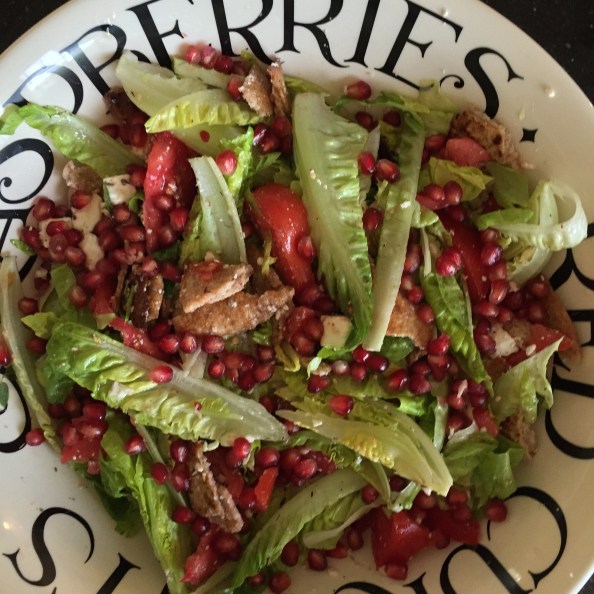
A delicious salad in my new favourite book, Honey and Co., is fatoush.  As far as I can tell, there exist many versions of it, but this is the first one I’ve come across which includes pomegranate.  If I was making it today I’d have to add the pitta without toasting it, because I don’t have an electric toaster.

Fatoush

Ingredients

  • 1 pitta, cut in half to make two thin pieces
  • olive oil
  • 1 head of Little Gem lettuce
  • 250g mixed tomatoes
  • 150g feta
  • 2 sprigs of fresh oregano, leaves picked (if you don’t have any fresh, use a little dried oregano in the dressing)
  • 2 tsp za’atar
  • 2 heaped tbsp fresh pomegranate seeds

Dressing

  • 1 clove garlic
  • 2 tbsp extra virgin olive oil
  • 1 tbsp red wine vinegar
  • 1/4 tsp sea salt
  • a little freshly ground black pepper

Method

  • Peel the garlic, place it on a chopping board and press down on it with the back of a knife until it’s crushed but still in one piece.  Mix it together with the other dressing ingredients in the bowl you want to serve the salad in, and leave to infuse for about an hour at room temperature
  • Brush the pitta pieces with a little oil, place them on a baking tray at the top of the roasting oven for a few minutes until they’re golden and crisp.  You can do this under a grill or in a regular toaster too.  Break into bite-size pieces
  • Separate the lettuce into leaves and cut these into strips
  • Cut the tomatoes in two or three different ways (slices, wedges, chunks) to give the salad some texture.  Crumble the feta but not too much
  • When you are ready to serve, remove the garlic clove from the dressing (it was only there to add a hint of flavour) and add all the salad ingredients to the bowl and toss them gently together

IMG_3074


At the 21st birthday party we went to recently, our hostess served this strawberry dessert which was absolutely delicious.  This is not a precise recipe; I’ll leave you to adjust quantities to your liking.

Strawberries in Balsamic Vinegar with a Mascarpaone, Fromage Frais and Vanilla Cream

  • Hull and halve or quarter your strawberries, depending on size, and place in a bowl with some sugar and balsamic vinegar.  I used a couple of tablespoons of balsamic and just a sprinkling of caster sugar for about 600g strawberries.  Leave these to infuse for a couple of hours.
  • Serve with the cream made up of 50% mascarpone and 50% fat free fromage frais, and a little vanilla extract and some caster sugar to taste
  • Serve the strawberries in individual bowls with large dollops of the cream on top

Apologies for not having a photo of this dessert but here are some strawberries anyway.


freegreatpicture-com-2848-high-definition-material-strawberry