Braised Sausages and Lentils

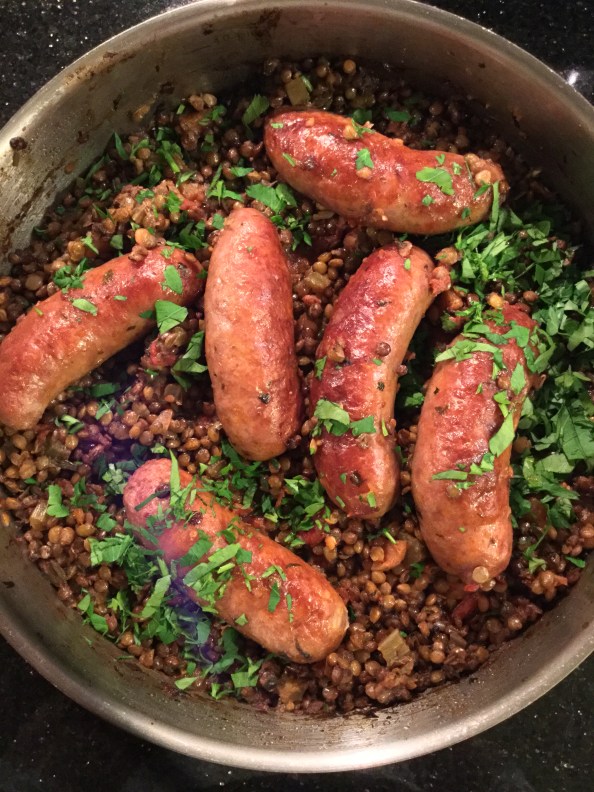
When I read this article about home comfort eating in The Times the other week, I couldn’t wait to make the braised sausages and lentils recipe.  It seemed so perfectly suited to Aga cooking and simple to make, but on my first attempt I ended up with far too much liquid in the pan, even after the lentils were thoroughly cooked and tender.  I remembered the important Aga rule always to use less liquid than the recipe states, but I obviously didn’t reduce the quantities by enough.  The resultant dish was delicious though, and I resolved to have another go very soon.

I was reminded of it last weekend which we spent away, leaving my sisters-in-law to look after the two elderly ladies of the household: my 91 year old mum-in-law and our 13 year old (also 91 in dog years!) spaniel, Rosie.Dog in Grass

It was a special weekend because our son W and his fiancée, K, were hosting a lunch for the two families to celebrate their engagement.  This took place at our flat in London where they are currently living.  They served up a veritable feast of ham hocks, roast chicken and gratin savoyard with leeks.  There were also braised puy lentils, a delicious winter slaw made with red cabbage, celeriac and sprouts and a mixed green salad.  For pudding K made tiramisù and her younger sister a blueberry and cinnamon cake.  They probably expected to serve all these dishes buffet-style, but we found that we could seat all fourteen of us at two pushed together tables.

IMG_2498

It was a very happy occasion and a lovely way for us all to get to know each other.  We like K’s family very much and I feel fortunate that we’ll have in-laws that we get on with.  Knowing that we would be eating well in the evening too, I was quite restrained and limited myself to a small amount of lunch.  At about 5 o’clock my husband and I left youngest son J with his brothers and future in-laws and headed off to the depths of rural Hampshire to stay with our good friends R and P in their beautiful barn conversion.  R is a superb cook and after a drink by the roaring log fire, we sat down to a dinner of salmon terrine, beef with a fennel and thyme crust, roasted vegetables, and dauphinoise potatoes (by now I was so glad I hadn’t eaten too much at lunchtime).  She also served a deliciously melting chocolate pudding, from a recipe by chef Marcus Wareing.

On Sunday the four of us went for a walk which we enjoyed despite the rain.  IMG_2518It helped us work up an appetite for a delicious lunch of sausages and a bulgar wheat salad (R and I agreed that sausages go so very well with grains or pulses) and this is what jogged my memory and led to me attempting the braised sausage and lentil dish again.

There were only three of us so I reduced the quantities in the Times recipe, but this is one of those dishes where you don’t need to be too precise.  (We had some left over which reheated beautifully for lunch the next day.)  I also adapted the recipe slightly to suit my available ingredients.  This is what I did:

Ingredients

  • 250g puy lentils
  • 4tbsp extra-virgin olive oil
  • 1 onion
  • 1 bay leaf
  • 4 garlic cloves, crushed
  • Pinch dried chilli flakes
  • Large handful of fresh flat leaf parsley, chopped
  • 1 stick celery, diced
  • 1 carrot, diced
  • 1 glass red wine
  • 1 tin whole plum tomatoes, drained
  • 6 good quality pork sausages
  • Chicken stock, approx 300ml, but probably less
  • 1 tbsp balsamic vinegar
  • A couple of handfuls of spinach leaves
  • Salt and pepper

Method

  • Cover the lentils with cold water, bring to the boil on the boiling plate, then simmer for 5 minutes on the simmering plate.  Tip the lentils into a sieve and wash under cold water until cold to the touch.
  • Pour half of the olive oil into a wide, shallow casserole or sauté pan.  Place it on the simmering plate and add the onion, bay leaf and a pinch of salt.  Coat everything in the oil, then cover and cook in the simmering oven for about 15 minutes until the onions are soft but not coloured.
  • Add the dried chilli, some ground black pepper, the parsley, celery and carrot.  Stir, then cook covered in the simmering oven for a further 15 minutes, until soft.
  • Add the garlic, stir, then pour the red wine over the vegetables, bring to the boil on the simmering plate and reduce by two thirds.
  • Add the blanched lentils, whole drained plum tomatoes, chopped up a bit, and place the sausages on top. Then add about 200ml of the chicken stock and bring to the boil.
  • Now you have a choice: if you have lots of time, place it, uncovered, in the simmering oven for a couple of hours, checking the stock level after about an hour and adding more if it’s looking dry, until the lentils are soft.  The problem with this method is your sausages might not brown very well, but 10 minutes in the baking or roasting oven at some point during the cooking should resolve that.  I was in a hurry, so I cooked mine for about an hour in the baking oven (I think the roasting oven would be too hot), turning the sausages over half way through to brown them all over.  I added a little stock during the cooking time but don’t think I used more than 250ml in total, a lot less than the Times recipe specifies.
  • When the lentils are tender and the sausages cooked, move to the simmering plate, add the spinach leaves and allow them to wilt.  Remove from the heat, stir through the rest of the oil and the balsamic vinegar and check the seasoning.
  • To serve, you could sprinkle over a little more chopped parsley.

I hope you enjoy this recipe.  For me, making it was a pleasure because it was so straightforward and – a huge plus – you don’t have to brown the sausages in advance.  Have I mentioned before my dislike of browning meat?  It makes such a mess with fat splashing everywhere, even in my hair, and leaving a thin film of grease on almost every kitchen surface.

IMG_0727

Ginger Cake

Ginger Cake

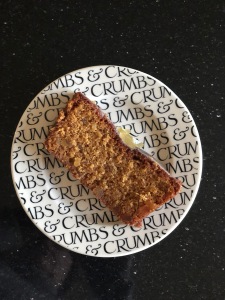
I’ve mentioned before that I’m a fan of Felicity Cloake’s “How to cook perfect…” series in the Guardian. This afternoon I’ve had a lovely time trying out her ginger cake. The recipe appeals to me because it doesn’t contain any black treacle. I’m eating a slice with my cup of tea as I write this.

I followed Felicity’s recipe precisely and I’m very pleased with it, but I think one could get away with using the all-in-one method for this; I’d mix all the ingredients together in my KitchenAid except for the fresh and crystallised ginger which I’d fold in at the end. I baked it in the baking oven with the rack on the floor. After 30 minutes I put a piece of baking parchment on top and also slid in the cold plain shelf to cool the oven down a little.  Total baking time: 50 minutes.

Felicity Cloake’s “Perfect” Ginger Cake

Ingredients

  • 100g butter, plus extra to grease
  • 100g dark muscovado sugar
  • 175g self-raising flour
  • 4 tsp ground ginger
  • 175g golden syrup
  • 3 tbsp ginger wine
  • 2 large eggs, beaten
  • Walnut-sized piece of fresh ginger, peeled and finely grated
  • 150g candied (crystallised) ginger, finely chopped
  • 75g icing sugar
  • 1 piece of stem ginger, to decorate

Method

  • Grease and line a 23cm loaf tin
  • Cream together the butter and sugar with a pinch of salt until fluffy
  • Sift together the flour and ground ginger
  • Pour in the golden syrup and 1 tbsp ginger wine and mix to combine
  • Beat in the eggs, a little at a time, then gradually mix in the flour
  • Stir through the fresh and crystallised ginger and spoon into the prepared tin
  • Level the top and bake in the baking oven for about 50 minutes until a skewer inserted into the centre comes out clean
  • Allow to cool in the tin
  • When it’s completely cool make the icing by mixing together the icing sugar and remaining ginger wine and drizzle over the top of the cake. Slice the stem ginger thinly and arrange down the centre of the cake

JcireE%lSSW%uvLY4Lz5xw


Candles


When I was growing up people only really used candles on birthday cakes, for a special dinner or if there was a power cut (and there were quite a few in the early seventies during the three-day week). This was not true in my house, however, because my Norwegian mother brought over her country’s tradition of lighting candles at all times of the day or night. She would stock up on them during our holidays in Norway because she swore that Scandinavian candles were better and did not drip.  Imagine her excitement (yes, really) when Swedish, not Norwegian, Ikea opened its first branch over here and she could buy candles almost anytime she felt like it. It meant she could use them with abandon, finances permitting, without having to worry about when she was next going to visit her relatives or when they’d next be crossing the North Sea to visit us and could be persuaded to bring candles with them.

If this is sounding somewhat obsessive I have to admit I’ve inherited the candle dependency. They add ambience, and let’s be honest, make everything look better and hide a multitude of blemishes, whether it be the lines on your face or the chips on your paintwork. What with Scandi Noir TV dramas and a growing interest in Scandinavian cuisine over here, we feel that we know a lot more about those countries. Magazines talk about hygge and give us tips on how to achieve it in our homes. Well, candles are part of that, and you don’t only have to light them when it’s dark. In my family a candle would always be lit at breakfast on someone’s birthday, for example.

I didn’t pay my usual pre-Christmas visit to Ikea to stock up on candles because I felt we had enough to see us through. I was right but I’ve been using them sparingly ever since for fear of running out completely, which would be a disaster. Seriously. Anyway, when I was there the other day I picked up my favourites: Jubla (tall, slim and white; see above), Fenomen (fat and white) and a couple of packs of tealights. I only ever have white candles. Red is lovely at Christmas but doesn’t go that well with the decor in our living and dining rooms so I find it easier to stick to white.

IMG_0721


No recipes for you in this post but there IS food.  It’s hard to drop into Ikea without picking up something to eat. This time I bought spicy ginger biscuits or “pepparkaka”: delicious with a cup of tea or, should you feel the urge, a glass of mulled wine.


Cardamom and Lemon Cookies

I know it’s not very modern but I had a quiet couple of days this week.  Yes, that’s right, I wasn’t rushing around like a mad thing; I pottered about, mainly at home, and it was lovely.  Such days are rare, although admittedly a little less rare now only one of my sons lives here permanently.

That’s not to say I was idle.  My activities included the following; cleaning bathrooms; laundry; ironing shirts; meeting a friend for coffee (one of my favourite pursuits); having a friend over for coffee (different friend, different day); tweeting (Twitter was rather compelling on Wednesday, following Mr Cameron’s “bunch of migrants” remark); walking the dog; vacuuming my mother-in-law’s flat (despite being nearly 91 she insists on doing housework but I help out occasionally); cooking (Middle Eastern lentils and rice was delicious); watching the celebrity Great British Bake-Off (I thought Samantha Cameron was lovely and – spoiler alert – a deserving winner); baking cookies.  I fear it all sounds terribly dull to you, but I enjoy days like that: they are a chance to catch one’s breath.

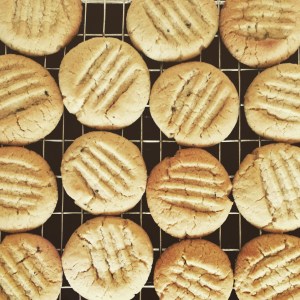
The cookies I baked were these:

IMG_0693

Cardamom and Lemon Cookies

The recipe is on the BBC website * and is by the Hairy Bikers, but it was my mother who drew it to my attention.  She is Norwegian and always makes Norwegian biscuits in the run-up to Christmas, which she then brings to us when she comes on Christmas Eve.  Some recipes she inherited from my grandmother (or “Mommo” as I called her) and have been around for many years, so the Hairy Bikers should be flattered that their recipe met with my mother’s approval.  She enjoyed watching the programmes they made in Northern Europe (I must admit I only caught one or two of them).  There is something special about baking things from recipes that have been passed down the generations.  My eldest son adores his great grandmother’s Lebkuchen (a Christmas treat originally from Germany) recipe and he and his girlfriend make them together.  In fact, they made a batch while they were with us over Christmas but I’m not ready to write about them yet because it was difficult to work out which Aga oven(s) to use and how long to bake them for.

You might be surprised to learn that cardamom is not just a spice for curries but is widely used in Scandinavian baking.  On the other hand, with the huge interest nowadays in all things Nordic, whether it be food or Noir TV series, you might not be in the least surprised!

As you can see from my Instagram photo above, I did not use a cookie stamp as described in the recipe; I simply pressed a fork onto the balls of dough to flatten them slightly before they went in the oven.

Hairy Bikers’ Cardamom and Lemon Cookies

Ingredients

  • 225g butter, softened
  • 150g caster sugar
  • 1 lemon, zest only
  • 250g plain flour
  • 100g ground almonds
  • 3 tsp ground cardamom or 1 heaped tsp cardamom seeds, ground in a pestle and mortar

Method

  • Preheat conventional oven to 190ºC
  • Line 2 baking trays with bake-o-glide** or baking parchment
  • Using an electric hand-whisk or food mixer (I used my KitchenAid), beat the butter, sugar and lemon zest together until pale and fluffy
  • Beat in the flour, almonds and cardamom until the mixture is well combined and comes together to form a stiff dough
  • Roll the dough into 24 balls and place 12 on each baking tray, making sure you leave space between each one
  • Press a fork onto the balls of dough to flatten them slightly
  • Bake, one tray at a time, in the middle of the Aga baking oven, for 14 minutes until the cookies are pale and golden.
  • Leave them to cool on the tray for a few minutes before transferring to a wire rack

* I updated this post today, 17 May 2016, following the news that the BBC was going to close its food website.  It’s therefore likely that the above link will soon no longer work.

**I always use bake-o-glide on my baking trays.  It’s brilliant stuff: non-stick and can go in the dishwasher.  I buy it via the Aga Cookshop website.

When my youngest son returned from his run yesterday afternoon he was very pleased to find something home-baked and sweet to aid his recovery.


Pheasant

image

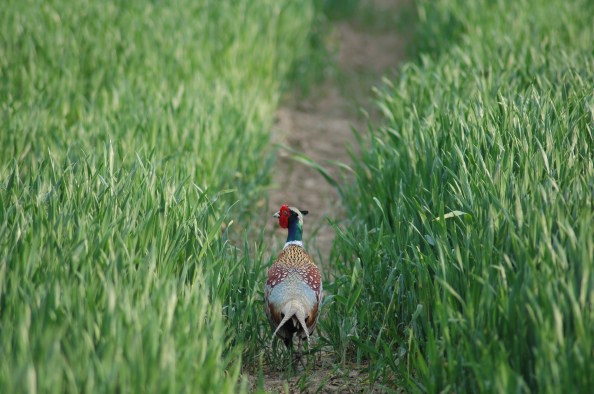
Pheasants were probably brought to Britain by the Romans. The common pheasant (Phasianus colchicus) has been superseded in British estates by captive breeding and hybridisation between subspecies from all over the world to improve flying and holding qualities. The bird on your plate in Britain is probably a cross of Polish, French, Danish, American and Japanese.

Almost every weekend during the shooting season, which runs from 1 October to 1 February, we eat pheasant. Purists out there might be shocked that we don’t leave ours to hang because we find the taste then becomes just too gamey. So birds brought back from a Saturday shoot are invariably eaten the next day.

IMG_0688

Rosie and Millie had a great day.

IMG_0685

The birds before plucking.

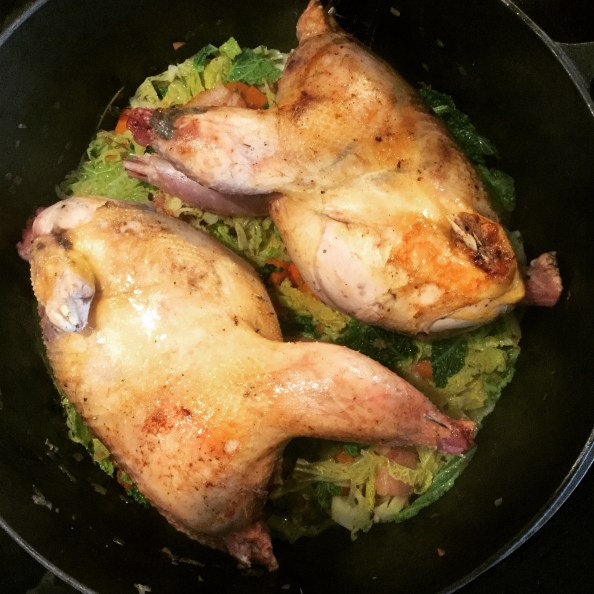
Very often I simply roast the birds, having smeared them in butter and wrapped them in bacon but pheasant, especially the older birds towards the end of the season, can be rather dry, so yesterday I chose to braise the birds, using a recipe by one of my favourite cooks, Diana Henry. It’s in her book “Food from Plenty”. (I cooked a brace but the recipe is for one bird.)

You need:

  • 65g butter
  • 1 oven-ready pheasant
  • 6 shallots, peeled and sliced
  • 1 carrot, diced
  • 1 stick celery, diced
  • 100g bacon lardons, or chopped streaky bacon
  • 1 small Savoy cabbage, shredded
  • 200ml chicken stock
  • 6 juniper berries, crushed
  • 3 sprigs fresh thyme

This is what you do:

  • Heat conventional oven to 190ºc
  • On the simmering plate, melt 25g of the butter in a heavy-bottomed flameproof casserole and brown the pheasant all over and set it aside. You can also do this on the floor of the roasting oven.
  • Add 2 tbsp olive oil to the pan, along with the shallots, carrot, celery and bacon. Cook until golden; can do this fairly quickly on the simmering plate or the floor of the roasting oven or more slowly in the simmering oven.
  • Add the cabbage, juniper and remaining butter.  Season and turn the cabbage to get it coated in butter.
  • Add the chicken stock and 3 thyme springs and bring to the boil
  • Return the pheasant to the casserole, cover and place in the roasting oven for 40 minutes, removing the lid for the last 15 minutes.
  • Or, if you have plenty of time, you can just leave this to cook in the simmering oven for an hour or two, uncovering it and browning it in the roasting oven for the last 15 minutes.

Cheat’s tip: if you don’t have any shallots use frozen, already peeled and chopped ones, available from Waitrose and probably other supermarkets too.  I always keep a packet in the freezer.

IMG_0560

The finished dish.

The Complete Aga Cookbook


512aoavjyzl-_sx258_bo1204203200_


I believe it’s still the case that when you take delivery of a brand new Aga, you also receive (for free!) a copy of “The Aga Book” written centuries ago (only joking) by the now, thanks to the Great British Bake-Off, incredibly famous Mary Berry.  My own copy of this book is still in regular use.  In addition to recipes, it explains how the Aga works and there are lots of helpful tips about cooking in an Aga.  I could not have done without this book in the early days.

I don’t think Mary would mind me saying that the recipes are a little old-fashioned now because this must be partly why she, her assistant, Lucy Young, and Aga have published a new, updated book.  There’s still a section on how to get the most out of your Aga but now it includes all the new models which have been introduced in recent years.  Some of the original recipes are there (all good basics) but also plenty of more modern ones, like Nasi Goreng and various pasta dishes.  Can you believe the original book has NO pasta in it?

My boys gave me this book for Christmas and on Saturday I made a scrumptious shepherd’s pie from it.  The lamb was cooked with a little port and redcurrant jelly and the mash topping was a mixture of potato and celeriac.  (Note to self: if you make it again, add some garlic to the mash.)

Leek and Potato Soup

Strictly speaking, this post should be entitled Leek, Onion and Potato Soup, but there can’t be many soups which DON’T have onion as an ingredient, surely?  One of the reasons I’m writing about soup is that I bought supermarket soup for lunch on Friday; it was just me and I wanted something quick, but I wish I hadn’t bothered.  I don’t know about you, but I find shop-bought soup, with the possible exception of Heinz tinned cream of tomato, however delicious it might taste at the time of eating (drinking?), tends to leave an oniony aftertaste.

So, with a plan to make soup in mind, I paid my usual Saturday visit to Whiteladies Road Market yesterday morning to buy crusty bread.  A rummage in the fridge then produced some ageing leeks, an onion and potatoes, which made the decision about what soup to make very easy.  I always use Delia’s recipe for this; it’s in her original “Complete Cookery Course” but if you haven’t got that book (you haven’t?) it’s on her website here.  It’s very easy to make, and delicious and warming.  It can be chilled and eaten cold (and renamed Vichyssoise) but I prefer it steaming hot.  Take care not to let it boil though.

Incidentally, ever since my mother gave me a handheld stick blender, just two or three years ago, I’ve been making soup a lot more often.  I have no idea how I came to this wonderful gadget so late in life, but thank goodness I did.

For Aga owners: I started the vegetables off on the simmering plate before putting the lid on and sweating them for about half an hour in the simmering oven.  Once the stock/water/milk had been added and it had been brought up to simmering point on the hotplate, it was returned to the simmering oven for 30-40 minutes until the vegetables were soft, left to cool for 10 minutes or so, and then blended.  The addition of a little cream to each serving is entirely optional.

Anonymity

Since starting a blog I’ve spent more time reading other people’s than writing my own.  Let’s say it’s in the interests of research.  I’m amazed at the variety of different styles out there, and it’s given me lots of ideas, but in the end my blog must be my own and not a poor imitation of someone else’s.

One thing about which I realise I have not been consistent and feel I should sort out before I go any further, is how to refer to my children, who are no longer children, let’s be honest.  I don’t plan to say much about them because I’m not sure they’d like me to, but it’s hard not to refer to them from time to time and I don’t want to use the Twitter shorthand I’ve adopted of Son1, Son2, Son3 and Son4.  So maybe I’ll do what a lot of bloggers do and use their initials, and ditto for other family members and friends who get a mention.  Will have to think of a way to get round the fact that youngest son and husband share their first initial (J).  J Senior and J Junior?  We’ll see.


The Cake That Went Wrong

We finished our Christmas cake a few days ago and since we’re not doing a clean/dry/healthy January or whatever it is we’re supposed to do, I decided to bake a cake yesterday, the first baking I’ve done since before the festive season.  When I asked my youngest what he’d like, he didn’t hesitate: the ginger cake from the Nordic Bakery Cookbook, a gift to me from his big brother.  I’m half Norwegian, which makes the boys a quarter Norwegian, and we all love the recipes in this book.  Actually, our youngest has baked more from it than I have, and very successfully.

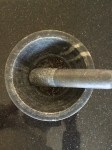
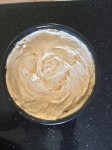
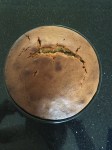
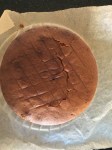
Since I last made the ginger cake (in an 8″ tin), I’ve bought the correct sized (7″) tin, which is the one I used yesterday.  I knew the cake would therefore be deeper and I’d need to make sure it was cooked in the middle.  At the end of the allotted time, the skewer came out clean, so I knew it was cooked through, but as you can see in the photos, I was WRONG.  As I turned it over the middle began to ooze out, creating, to much wailing by me, a massive sink hole.  How could this be?   One explanation is that I inserted the skewer at an angle and somehow missed the middle, but I don’t really believe this.  Nor do I think it has anything to do with the timing adjustments one has to make for Aga cooking because I’ve got used to that now and nothing like this has happened before.  Mind you, that’ll teach me to think smugly that I might write a blog in which I pass on cooking tips and recipes to fellow Aga owners.  Rest assured though, I will not rest until the mystery is solved and I WILL be having another go at this one.

Apart from the middle, which I scooped into the bin, the cake was absolutely fine, so when my son came home from school, I put the kettle on and we laughed at my mishap.   Oh, and ate some cake.


Desert Island Discs

Today’s podcast to accompany my dog walk was Desert Island Discs.  The castaway this week was Sir Anthony Seldon, the former Master of Wellington College and author of several political biographies.  While I was familiar with his career, and his views on education in particular, until today I did not know anything about his personal life.  He spoke movingly about his marriage, his children and his wife’s diagnosis with terminal cancer.

He said a couple of things which resonated with me which I quote here, but do listen to the whole podcast.

In answer to Kirsty’s question about whether independent schools should be abolished, he said: “If the quality of education was as good as it is at the best independent and the best state schools, then that might be the ideal, though I still think there’s a role for a different sector that challenges, which doesn’t have to be subject to the same governmental regimes as the rest.”

“It’s the raising of expectations which is at the heart of good education, good schooling, good universities…”

“When the children came into their mid to late teens and discovered their friends were a lot more exciting than their mum and dad…we did discover that by taking them off on short breaks of four or five days every year to somewhere sunny with a bit of culture, it was a way of keeping them together.”


IMG_2448

It was cold but a gorgeous day for walking the dog.


You will have noticed that this post has nothing to do with my Aga, but it is about what I’ve been listening to on Radio 4 which is the usual background noise in my kitchen, so I have no plans to rename my blog yet.